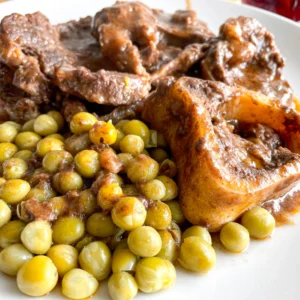
Ossobuco alla Romana
Italian Beef Ossobuco with Peas
Ingredients
1 kg beef ossobuco (cross-cut beef shanks)
1 carrot
1 celery stalk
1 onion
Tomato pulp (passata or crushed tomatoes)
150 ml dry white wine
Butter
Extra virgin olive oil
Water, for the vegetable stock
Salt
Nutmeg
Thyme
400 g cooked green peas
Instructions
- Rinse the ossobuco pieces under cold running water and pat them dry with paper towels to remove excess moisture. Otherwise, too much flour will stick to the meat. Trim away any tough connective tissue around the edges and make a few small vertical cuts around the perimeter of each piece (photo 1). This will prevent the meat from curling during cooking and help it keep its shape.

- Coat each piece of ossobuco lightly in flour (photo 2), then shake off any excess. Too much flour can affect the flavour and texture of the sauce. Melt some butter in a hot frying pan and brown the floured meat on both sides (photo 3). Transfer the browned pieces to a separate saucepan (photo 4), cover with a lid (photo 5) and keep warm while you prepare the vegetables for the sauce.
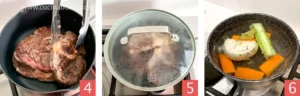
- Prepare the vegetable stock in a separate saucepan using onion, carrot, celery and herbs and spices such as thyme, rosemary and bay leaves (photo 6).

- Prepare the vegetables for the sauce. Remove the tough strings from the celery (photo 7) and finely dice it, along with the carrot and onion. Heat a little olive oil in a clean frying pan and sauté the onion for a few minutes (photo 8). Add the carrot and celery (photo 9) and cook over medium heat for about 5 minutes. Transfer the browned ossobuco pieces to the pan with the vegetables (photo 10).

- Pour the white wine into the pan (photo 11). Let it evaporate for a couple of minutes, then add the tomato passata (photo 12). Stir gently to combine.
- Pour in a little hot vegetable stock (photo 13). Keep the remaining stock warm so you can add more as needed during cooking. Cover with a lid and let the ossobuco simmer very gently for about 2½ hours, adding more vegetable stock whenever necessary.

- Add the cooked green peas and grate in some fresh nutmeg. Season with salt and cover again. Simmer for another 15 minutes, then turn off the heat.
- Let the ossobuco rest for a few minutes before serving. Enjoy!
Notes
You can freeze the cooked ossobuco with peas and keep it in the freezer for up to two months.